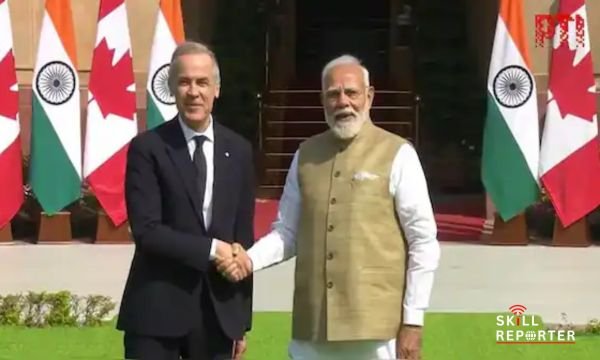
The Right Honourable Mark Carney, Prime Minister of Canada, paid an official visit to India from February 27 – March 2, 2026, for the first time after taking over as the Prime Minister of Canada. Prime Minister Carney was accompanied by a Canadian high-level delegation that included senior ministers, provincial leaders and leading CEOs.
Commemorating 79 years of establishment of diplomatic relations, the Leaders reaffirmed the importance of the Canada–India relationship, grounded in shared democratic values, deep people-to-people ties, respect for sovereignty and territorial integrity, and a joint commitment to the rule of law.
The Leaders acknowledged that, in an increasingly complex and uncertain global context, a strong, resilient, and forward-looking partnership between two vibrant democracies contributes meaningfully to mutual prosperity and to advancing shared global priorities. They underscored that closer cooperation between India and Canada will help reinforce international rules and norms that are applied fairly, strengthen economic resilience, promote sustainable development, and address global challenges. The Leaders affirmed their shared resolve to work together bilaterally and in multilateral fora to uphold democratic values, support inclusive growth, and contribute to peace, stability, and prosperity in the Indo-Pacific and beyond.
Also Read: Major Reform in ITI Training: Mandatory 150 Hours of OJT / Group Project Introduced by DGT
Building on this shared vision, the Leaders agreed to adopt the principle of “Vasudhaiva Kutumbakam” or “One Earth, One Family, One Future” as the overarching guiding framework for the renewed India–Canada Strategic Partnership, reflecting their commitment to sustainability, inclusivity, and collective global responsibility. They underscored the alignment between India’s vision of Viksit Bharat and Canada’s Build Canada Strong agenda, and affirmed that enhanced bilateral cooperation across growth, innovation, energy transition, food and nutrition security, trusted digital ecosystems, resilient supply chains, skills and talent mobility, and people-centric development will serve as a catalyst for resilient societies, shared prosperity, and a more sustainable future for both countries and the wider world.
The leaders underscored the central role of education and talent mobility in advancing people-to-people ties between India and Canada. They noted that the movement of students, researchers, and professionals has been mutually beneficial, strengthening innovation ecosystems and economic growth in both countries.
Recognizing the importance of international academic collaboration in fostering innovation; improving learning outcomes; and building a future-ready workforce, the Leaders agreed to deepen cooperation between higher education institutions by enhancing industry aligned skills training; expanding joint; dual-degree and twinning programs; facilitating the establishment of offshore campuses of leading Canadian institutions in India; strengthening research partnerships in emerging technologies; and revitalizing the Joint Working Group on Higher Education to further support cooperation in this area.
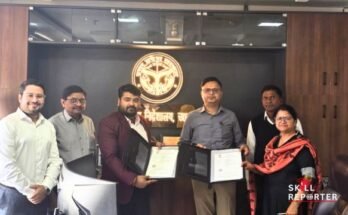
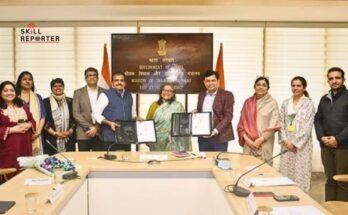
The Leaders welcomed the Memorandum of Understanding between India’s All India Council for Technical Education (AICTE) and Canada’s MITACS to expand the Globalink Research Internship program, enabling approximately 300 Indian undergraduate students annually to undertake research placements at Canadian universities. They noted that this flagship initiative will strengthen institutional linkages, deepen academic collaboration across disciplines, and build future-ready skills through hands-on research and professional training.
Leaders welcomed a new Joint Talent and Innovation Strategy, a developing initiative aimed at embedding Canadian research and innovation capacity in shared priority sectors and strengthening two-way talent flows through structured mobility, joint training pathways, and research collaboration.
Connect with us on LinkedIn, Click Here
They underscored the importance of fostering deeper institutional partnerships, researcher mobility, and knowledge exchange to advance innovation, build capacity, and support shared Indo-Pacific priorities. In this context, they welcomed Canada’s Indo-Pacific Scholarships and Fellowships for Canadians (IPSFC) program as a meaningful step toward strengthening academic and research linkages between Canadian and Indian institutions. They noted that over 85 Canadian graduate students and researchers from 11 Canadian post-secondary institutions will travel to India under the program to collaborate with leading Indian academics across priority areas including clean hydrogen, climate resilience, artificial intelligence, trade and supply chain resilience, and sustainable development. The Leaders also welcomed the conclusion of twenty-four education-related MOUs.
The Leaders reaffirmed the importance of empowering Indigenous and Tribal communities in both countries and recognized their rich cultural heritage, traditional knowledge systems, and enduring contributions to national development. They welcomed Bharat Tribal Festival (BTF) 2026 as an example of an important platform to promote global exchanges in entrepreneurship, cultural preservation, and sustainable livelihoods. The Leaders agreed to encourage dialogue and collaboration in areas such as cultural exchange, skills development, traditional knowledge, and market access for community-based products, with a view to strengthening inclusive growth and reinforcing people-to-people ties grounded in mutual respect for diverse cultures and traditions.
The Leaders welcomed the recent Canada–India Track II Strategic Dialogue, which brought together policymakers, experts, business leaders, and civil society to explore pathways for translating the diplomatic reset into concrete cooperation across issues such as economic resilience, emerging technologies, energy security, and people-to-people exchanges.
They affirmed that a stronger India–Canada partnership will also contribute positively to regional stability, global resilience, and shared prosperity, reflecting their common commitment to building a more inclusive, sustainable, and secure future.