Human-centric skills, such as empathy, critical thinking, ethical reasoning, and effective communication, are more important than ever as automation alters traditional job roles and artificial intelligence (AI) transforms industries. Surprisingly, these are the main advantages of teaching social science and the humanities.
However, many graduates from these fields struggle with employability—not because they are incapable, but rather because academia has not completely incorporated industry exposure, future-ready skill pathways, and structure into the learning ecosystem.
The relevance of humanities education is not the question at hand.
The question is: How can we prepare humanities graduates to utilize their skills in a changing workplace?
The Challenges: A Reality Check
Social Science and Humanities universities still confront a number of structural issues despite their solid intellectual foundation:
- Limited opportunities for internships and industry connections
- Hiring bias in favor of STEM programs
- Curriculum gaps in the development of digital and career-aligned skills
- Teachers who need to be exposed to modern resources and applied pedagogies
- Limited placement and career support systems
- Low awareness among students regarding new career opportunities in the policy, CSR, UX, sustainability, and digital sectors
Due to these obstacles, students frequently graduate with knowledge but lack exposure, visibility, and self-assurance which is necessary to succeed in contemporary careers.
Constructing the Bridge: The Role of Universities
Institutions must create future-ready ecosystems that combine academic excellence with the development of practical skills to realize the full potential of humanities education.
- Embed skill education curricula in their main course curriculum
- Set up labs with industry so that students can take some skill-based courses along with their degree programs
- Offer add-on skill programs that will make them employable
- Restructure curricula along with industry professionals
- Collaborate with industry, think tanks, media outlets, research organizations, NGOs, and CSR wings
- Introduce micro-credentials in digital literacy, policy analytics, AI, cyber security, UX research, and sustainability
- Introduce Apprenticeship Embedded Degree Programs
- Collaborate with various industries and associations to give insights about emerging job roles and opportunities
- Organize lectures from industry professionals
- Offer apprenticeships, field labs, and experiential learning programs
Future-Ready Skill Areas for Humanities Graduates
Today’s employers seek versatile thinkers who can navigate complexity and drive meaningful change. Key skill domains include:
- Critical and analytical thinking
- Communication, writing, and storytelling
- Data interpretation and digital literacy
- Leadership and teamwork
- Behavioral insights and UX research
- Public policy and sustainability awareness
- Media strategy and digital branding
This blend of human insight and applied skills is what differentiates future leaders from degree holders.
What Organizations Gain
When universities commit to skills and employability integration, they unlock multiple benefits:
- Increased confidence and employability among graduates
- Improved institutional reputation and appeal for admissions
- Solid industry and CSR collaborations
- Innovation-ready, NEP-aligned educational models
- A new generation of ethical, creative minds and socially conscious leaders
The Way Forward
Graduates in the humanities and social sciences are in a unique position to take the lead in a time when artificial intelligence and human intelligence coexist.
Universities can enable students not only to endure change but also to drive it by combining solid academic foundations with pathways for the development of practical skills.
Ethical thinkers, cultural evangelists, storytellers, policy innovators, community builders, and leaders with a clear mission will be rewarded in the future.
And how colleges educate their students now sets the stage for that future.
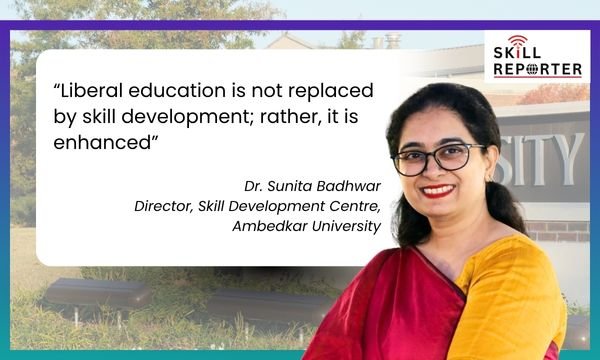
Final Thought: Liberal education is not replaced by skill development; rather, it is enhanced.
The views expressed in the article above are those of the author of the article Dr. Sunita Badhwar, Associate Professor, School Of Vocational Studies & Director, Skill Development Centre, Ambedkar University Delhi.
(Disclaimer: The matter and intent of this article have not been edited by skillreporter.com. Skill Reporter shall not be responsible for any person/ organization directly or indirectly.)