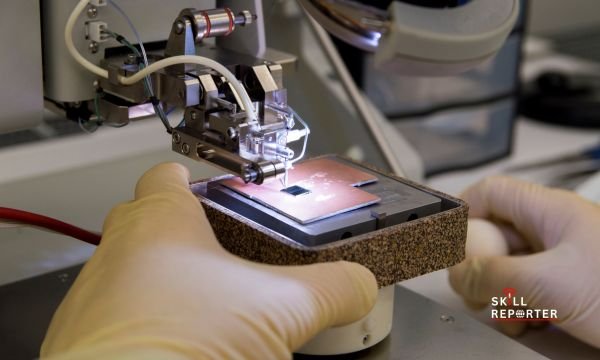
India, as one of the fastest-growing digital economies, represents a significant opportunity for the semiconductor industry. With its burgeoning demand for electronics and emerging technologies, India’s semiconductor market is expected to grow at a CAGR of 19% from $27 billion in 2021 to $64 billion by 2026. Recognizing this potential, the Government of India has launched the Semicon India Program with an outlay of ₹76,000 crore (approximately $10 billion), aimed at incentivizing semiconductor design, manufacturing, and research.
India’s strengths lie in its vast pool of engineering talent and established capabilities in chip design, with over 20% of the world’s semiconductor design engineers working for global giants like Intel, Qualcomm, and NVIDIA. However, the lack of domestic fabrication capabilities and dependency on imports for over 90% of its semiconductor needs poses a significant strategic challenge. Bridging this gap requires targeted investment, robust policies, and the development of a skilled workforce to transform India into a global hub for semiconductors.
As the global semiconductor landscape grows increasingly complex and competitive, the demand for specialized talent across this value chain continues to rise. Despite growing industry demand, India faces a significant skills gap that could impede its ambitions. The scarcity of skilled professionals in fabrication, Assembly, Testing, Marking, Packaging (ATMP), and process engineering poses a challenge to scaling up domestic capabilities.
A comprehensive workforce development framework is therefore essential to bridge this gap and sustain India’s competitiveness. This includes identifying core and emerging skill sets, upgrading academic and vocational training programs, and fostering strong industry-academia linkages. By building a future-ready semiconductor workforce, India can not only meet domestic industry needs but also position itself as a talent hub in the global semiconductor ecosystem, contributing significantly to national technological and economic advancement.
Significance of Semiconductors
Semiconductors are now not only technological enablers but also strategic assets, influencing national security, economic resilience, and global supply chain dynamics. As semiconductor applications expand across sectors, the availability of skilled professionals will be central to sustaining innovation and national self-reliance.
Gaps and Challenges:
While India has made commendable progress in the semiconductor sector, several challenges continue to exist within the current ecosystem. The Government of India remains committed to its objective of catalysing the overall semiconductor ecosystem as a critical enabler for expanding the nation’s rapidly growing electronics manufacturing and innovation landscape.
In this regard, focused and strategic interventions are being undertaken to address following key challenges:
- High capital investment requirements, especially in establishing fabrication and packaging facilities
- Limited R&D and innovation capacity, particularly in advanced materials and process technologies
- Inadequate infrastructure, including cleanrooms, specialized tools etc.
- Shortage of industry-ready skilled workforce across design, fabrication, and ATMP functions
- Need for a resilient supply chain, covering materials, tools, and logistics
In response, proactive policy measures are being implemented to strengthen India’s semiconductor manufacturing and design capabilities and to ensure greater self-reliance in this strategic domain. The convergence of India’s potential in semiconductor manufacturing, availability of a young and skilled workforce, enabling policy framework, strategic geographical advantage, technological advancements, investments by key industry stakeholders, and global collaborations for supply chain resilience is expected to position India as a preferred global destination for semiconductor manufacturing and innovation.
Learning from Other Countries
| Country | Takeaways |
|---|---|
| USA | Being World leader in semiconductordesign, strong IP base, The USA enacted the CHIPS and Science Act (2022) with USD 52 billion in funding for semiconductor R&D, domestic manufacturing, and STEM workforce development. It includes tax credits to incentivize investment in domestic fabrication facilities. The U.S. semiconductor industry benefits from a strong ecosystem of universities, research institutions, and a skilled workforce. |
| Taiwan | Global leader in advanced chip manufacturing (TSMC) – Taiwan leads in deep integration of foundries, packaging, and testing. To support this, six university-based semiconductor research institutes are set up with industry governance. Early introduction of chip-related curriculum in vocational and high schools strengthens foundational skills. Corporate-led training programs like TSMC’s onboarding centre accelerate hands-on workforce readiness. |
| Japan | Global leader in semiconductor materials and equipment manufacturing – The government subsidies and tax incentives to rebuild domestic chip production. It produces over 30% of the world’s lithography and wafer tools. Public–private initiatives support next-gen technologies like 2 nm chips, backed by JPY 2 trillion in strategic R&D funding. Strong university–industry partnerships and reskilling programs aim to address workforce gaps and support fabs. |
| Malaysia | Malaysia’s National Semiconductor Strategy includes RM 25 billion in fiscal support to upskill 60,000 engineers by 2030 to meet growing industry demand. Initiatives like the Penang STEM Talent Blueprint focus on early talent development. German-style TVET programs with RM 1.2 billion funding strengthen vocational and STEM education. |
| Conclusion: | Across all global semiconductor leaders, three common pillars emerge namely, sustained investment in R&D, strong industry-academia linkages for workforce readiness, and targeted public support through fiscal or infrastructural incentives. |
The global demand
The global semiconductor industry is projected to require nearly 1 million additional skilled professionals by 2030, particularly in areas such as fabrication, packaging, and design verification (Deloitte Global Semiconductor Talent Shortage report, 2022). India produces over 1.5 million engineers annually, yet less than 3% are considered semiconductor-ready. While India has made significant strides in chip design, with over 125,000 engineers engaged in design services, there is a marked shortage of fab operators, process technicians, and ATMP engineers—skills essential for the complete semiconductor value chain.
With targeted investment in skilling programs, vocational education, and curriculum alignment, India has the potential to bridge this talent gap. By doing so, it can position itself not only to meet domestic industry demands but also to become a global semiconductor talent hub.
India Semiconductor Mission (ISM)
India Semiconductor Mission (ISM) is a specialized and independent Business Division within the Digital India Corporation that aims to build a vibrant semiconductor and display ecosystem to enable India’s emergence as a global hub for electronics manufacturing and design. Envisioned to be led by global experts in the Semiconductor and Display industry, ISM serves as the nodal agency for efficient, coherent and smooth implementation of the schemes. ISM has been launched as a key strategic response to unlock India’s potential in high-tech electronics and chip manufacturing. It is expected to generate ₹6.5 lakh crore in incremental GDP, attract over ₹1 lakh crore in investment, enable ₹1.6 lakh crore worth of exports, and create over 32,500 high-skilled direct jobs and 1 lakh indirect jobs over the next 20 years.
Government Initiatives (for skill development in semiconductor mission)
- Development of Skilled and Talented Workforce: Capacity building and skill development is foundation of the Semicon India program and require dedicated programs in semiconductor domain. Up to 2.5 % of the outlay of the following three schemes is allocated to the R&D, Skill Development and Training requirements. To develop a roadmap for “India as a Semiconductor Talent Nation”, the committee constituted submitted “Semicon India Future Skills Talent Committee Report” which states an estimated additional 2,75,000 manpower will be required by 2032 in VLSI (Very Large Scale Integration) chip design sector and an estimated 25,000 and 29,000 manpower will also be required for fab and ATMP facilities respectively in the country in next 10 years. Altogether, 103 academic institutions/organisations across the country are participating in the Scheme. New curriculums in VLSI Design and Semiconductor Technology have been launched by AICTE at UG & Diploma level as a step towards creation of Talent pool in Semiconductor domain. ISM has signed a MoU with Purdue University, USA, to enable collaboration for development of skilled workforce and specialized R&D programs. Lam Research, USA, Semiconductor Equipment Manufacturer has announced in 2023 Semicon India Conference, to train 60,000 workforce in the next 10 years through its Semiverse Solution virtual platform in collaboration with Indian academic institutions.
- Promoting Start Ups and Entrepreneurship: The Design Linked Incentive (DLI) Scheme has been specifically initiated to promote entrepreneurship and support start-ups in the semiconductor chip design sector. By offering financial incentives and access to advanced design infrastructure, the scheme aims to empower domestic start-ups and MSMEs at critical stages of design, development, and deployment of semiconductor IPs, chips, and products. This initiative is geared toward fostering innovation, encouraging new business ventures, and building a self-reliant semiconductor ecosystem that drives import substitution and value addition in strategic, social, and financial sectors over the next five years.
Existing Collaborations
Odisha state government signed an MoU with Synopsys, Inc. which has a significant presence in India, employing over 6,000 professionals across major cities, including Bangalore, Hyderabad, Noida, Mumbai, Pune, New Delhi, and Bhubaneswar, to build a collaborative ecosystem focused on semiconductors and Very-Large-Scale Integration (VLSI). This partnership aims to support talent transformation and provide semiconductor-focused research support, aligning with Odisha’s ambitions in the semiconductor and electronics sectors.
IIT Bombay and IISc Bangalore have signed India Semiconductor Ecosystem Workforce Development Strategy Report 2025 MoUs with Synopsys.Inc., on research partnerships, educational software and curriculums, and faculty development programs to support workforce development.
The India Semiconductor Workforce Development Program (ISWDP), a collaboration between the Indian Institute of Science (IISc) and Synopsys, aims to bridge the skill gap by providing comprehensive training in semiconductor design, modeling, simulation, and device development. This initiative is crucial in ensuring that India remains competitive in the global semiconductor market and contributes to the innovation and deployment of next-generation technologies. Additionally, through partnerships with the Indian Government’s Chips to Startup (C2S) program and the Synopsys Academic & Research Alliances (SARA), Synopsys is working with over 400 universities to foster talent creation across various semiconductor domains.
Join our growing Skill Updates Network, Click Here
Major Announcements:
- In July 2023, Renowned Semiconductor Developer Advanced Micro Devices (AMD) announced a five-year, $400 million investment in India that includes a new campus in Bangalore that will serve as the company’s largest design center, as well as the addition of approximately 3,000 new engineering roles, bringing AMD’s total workforce in India to nearly 10,000 by 2028.
- In 2000, Lam Research Corporation, a U.S. manufacturer of equipment for thin film deposition, plasma etch, photoresist strip, and Wafer cleaning processes, launched Lam Research India. The unit, which now employs over 2,000 Indian workers, focuses on software development and support, hardware engineering, global operations management, and analytics. In particular, Lam India’s hardware team designs subassemblies and subsystems for all Lam’s product lines required globally.
- In June 2023, Lam India announced plans to train up to 60,000 Indian engineers through its Semiverse Solutions virtual fabrication platform to accelerate India’s semiconductor education and workforce development goals. In support of the skilling initiative, Lam India signed an MoU with the Centre for Nano Science and Engineering (CeNSE) at the Indian Institute of Science (IISc) in Bengaluru to support skilling of 60,000 Indian engineers. Lam India also proposed a $25 million investment to set up a new lab in the state of Karnataka. In June 2023, Applied Materials, another semiconductor toolmaker, announced plans to invest $400 million over four years to launch a new engineering center in India, which will support more than $2 billion of planned investments and create over 500 new advanced engineering jobs.
- Malaysia’s Spring Semiconductors, in partnership with T-Consult, will train 10,000 Telangana youth in chip design and manufacturing by 2030.The program includes 6 months of training in Telangana followed by 6 months of global internships in Taiwan, South Korea, and Japan. Supported by the Telangana government, this initiative aims to build a skilled semiconductor workforce for India’s growing industry.
- Tata Electronics is making significant strides in India’s semiconductor landscape by establishing a state-of-the-art semiconductor fabrication plant. This ambitious project aligns with India’s vision to become a global hub for electronics manufacturing and semiconductor production. The plant is expected to bolster India’s capabilities in advanced semiconductor manufacturing, contributing to the growth of the Electronics System Design and Manufacturing (ESDM) sector. By leveraging cutting-edge technology and Tata’s vast industrial experience, the facility aims to reduce dependency on imports, enhance self-reliance in semiconductor supply, and create a skilled workforce for the future.’
Skilling in Semiconductor & Components – Need & Importance
- Current status of skilling in Semiconductor & Components
- The Indian government has launched various initiatives to boost semiconductor skills, such as the ‘Semiconductor Mission’ under the Production Linked Incentive (PLI) scheme, which aims to promote manufacturing and skill development in the semiconductor sector.
- The Government recognised various Awarding Bodies (ABs) to carry out the skill based training across the nation by developing Qualifications on the future skills such as Semiconductor manufacturing, VLSI etc.
- Programs like the Skill India Program and Pradhan Mantri Kaushal Vikas Yojana (PMKVY) are being leveraged to deliver industry-specific skills.
- Collaborations between industry and academic institutions are on the rise. Companies like Intel, Qualcomm, and ST Microelectronics are partnering with Indian universities and technical institutes to provide practical training and curriculum support.
- Industry-driven training programs and certifications are increasingly being introduced to align with global standards.
- The curriculum in engineering colleges and technical institutes is being updated to include more semiconductor-specific courses.
- Specialized programs and postgraduate courses focused on semiconductor technology and VLSI (Very-Large-Scale Integration) design are being introduced.
- Several dedicated training centers are being set up across the country. These centers provide hands-on experience with semiconductor design and manufacturing tools.
- Centers of Excellence (CoEs) in semiconductor technology are being established to foster research and skill development.
- Tech giants and start-ups are investing in skilling programs. For instance, companies are offering internships, apprenticeships, and on-the-job training to build a skilled workforce.
- Online platforms and e-learning courses are being utilized to provide flexible learning options for professionals and students.
- India is seeking international collaboration to boost skilling efforts. Partnerships with countries like the USA, Japan, and Taiwan are being explored to gain access to advanced training methodologies and technologies.
- Memorandums of Understanding (MoUs) with global semiconductor leaders are being signed to facilitate knowledge transfer and skill development.
- Training programs are increasingly focusing on emerging technologies such as AI, IoT, and 5G, which are heavily reliant on advanced semiconductor components.
- Efforts are being made to integrate these emerging technologies into the existing skilling frameworks to prepare the workforce for future demands.
Courses available as part of skilling in National Qualification Register (NQR)
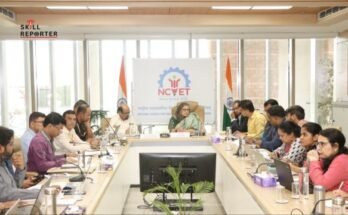
The National Qualifications Register (NQR) is a comprehensive database of all qualifications aligned to the National Skills Qualifications Framework (NSQF) in India. It serves as a central repository for information on various qualifications, including their levels, pathways, and Awarding Bodies recognised by NCVET. There are total 67 courses approved by NCVET developed by Awarding bodies like DGT, NIELIT, Electronics sector skill council, Telecom Sector skill council, Medhavi skill university etc. Awarding Bodies in collaboration with Original Equipment Manufacturers(OEM) like ARM Cortex-M0 Design Foundation, SIC- IOT have developed qualifications required for the semiconductor value chain.
Development of Qualifications/Courses
India’s strategy for capacity building in the semiconductor and electronics value chain emphasizes the development of industry-relevant qualifications and modular training programs, anchored in a long-term roadmap. However, despite the availability of various courses across engineering institutions and the broader skilling ecosystem, most offerings remain misaligned with the practical skill requirements of fabs, OSATs, and ATMP facilities.
Did you miss out to apply?
The Way Forward
Human Resources and Talent Development: Skilled engineers, technicians, scientists, and support staff are critical to the semiconductor industry. Continuous training and development, coupled with global talent acquisition strategies, are essential to sustain innovation and growth in this highly technical field. The semiconductor industry is indeed facing significant talent challenges.
- Career Advancement Opportunities: Providing clear paths for career progression encourages professionals to continually develop their skills and knowledge. Companies should offer opportunities for growth, whether through promotions, lateral moves, or skill-based advancements.
- Investment in Training and Development: Companies should invest in training and development programs to attract new talent and retain existing employees. This includes sponsoring workshops, webinars, conferences, and creating department-specific mentorship initiatives.
- Partnerships with Universities: Collaborating with universities can help cultivate a pipeline of skilled graduates who are ready to meet industry demands. By actively engaging with educational institutions, companies can ensure a steady supply of qualified candidates.
Urgent Need: The urgent need to address the inadequately catered parts of most curricula such as equipment handling, safety protocols, will help for modular, simulation-based, and industry vetted skilling programs, co-developed in partnership with fab equipment manufacturers, OSAT players, and international training providers.
The identified key areas in which talent development is crucial are as follows:
- Knowledge about VLSI, Embedded systems,
- IoT, EDA tools
- logic gates CMOS, NMOS, System integration, Basics of Python, RealTime Logic RTL
- Basics of Electrical and Electronics, Semiconductor devices, Wafer Dicing
- Material expertise, knowledge of chemicals, quality assurance, Clean room operations for semiconductors, Industrial Safety for, Semiconductor, Manufacturing
- Industrial Safety for Semiconductor Manufacturing,
- Essentials Fundamentals of IoT, IoT Technologies
- Clean room operations for semiconductors
- Adaptability and Problem Solving skills
- VLSI Design, Verification, and Testing
- ATMP (Assembly, Testing, Marking, and Packaging
- Embedded Systems Design
Training of trainers/assessors
To build instructional capacity across the semiconductor skilling ecosystem, a structured Training of Trainers/Assessors (ToT/A) program is necessary with a focus on process intensive, cleanroom-ready, and design-aligned job roles. The program needs to target faculty members from engineering institutions, ITIs, polytechnics, and short-term skilling partners delivering semiconductor-related qualifications as conducted by AICTE though ATAL scheme given below.
The ToT/A program is required to be aligned to NSQF levels and will cover specialized modules such as photolithography, CMP, wafer inspection, bonding and packaging, functional test development, EDA tool usage, and cleanroom protocols. Trainers will undergo blended learning including simulation-based training, industry exposure, and assessment-based certification.
To ensure industry relevance, the program needs to be implemented in collaboration with Original Equipment Manufacturers, OSAT partners, and leading academic institutions. In this regard, AICTE has been conducting various Faculty Development Programs (FDPs) for imparting/upgrading faculty knowledge in emerging thrust areas like IoT, ML, AI, robotics, block-chain, renewable energy, AR/VR, etc.
AICTE Training and Learning (ATAL) Scheme: ATAL Cell (Training and Learning Bureau) collaborated and invited experts from various leading corporates such as ARM India, Cadence Design Systems, Adobe, Ford Motors, Google, Amazon, Metaverse, Tata Energy, LinkedIn, TCS, Wipro, Infosys, etc. and launched ‘TechSaksham’ program with Microsoft and SAP. ATAL Academy in collaboration with ARM India Ltd. conducted a FDP on ‘Embedded systems-an application driven approach. A.Y 2022-23, ATAL Scheme has sanctioned 441 FDPs in various emerging areas in face-to-face mode with 22,539 registered and 15,341 certified participants.
FDP’s in Semiconductor in Regional Languages: FDP’s in regional languages for semiconductor play a critical role in building a skilled workforce and make sure that educators from diverse linguistic backgrounds can effectively participate and get benefit from advanced training. AICTE has conducted many FDP’S in semiconductor in regional languages.
Recommendations
- Development of project-based learning courses for Higher Education Institutions (HEIs) to be integrated into curriculum and summer internship programs for undergraduate (UG) students. These courses should also be considered for postgraduate (PG) students.
- AICTE recognised bodies should introduce new courses in semiconductor development under the SWAYAM (Study Webs of Active Learning for Young Aspiring Minds) platform. Upskilling and faculty
development programs for both academic professionals and industry leaders should also be established. - Organize hackathons and grand challenges to stimulate student interest in the semiconductor sector at state and national level.
- Develop modular, self-paced online courses such as nano-credentials, micro-credentials or National Occupational Standards (NOS)s on semiconductor design and development, supplemented by lab exercises. These courses should be offered on platforms like SIDH and SWAYAM.
- Introduce a specialized degree in VLSI (Very-Large-Scale Integration) Design, ensuring that foundational semiconductor courses are covered in the first two years of engineering. Semiconductor design electives should be offered in the 3rd and 4th years, with a strong focus on practical training during the final year.
- Enhance partnerships between industry and academia to ensure coursework and practical training remain aligned with technological advancements in the semiconductor industry.
- Utilize virtual platforms like SWAYAM and DIKSHA to provide reskilling and upskilling programs for students from Tier-2 and Tier-3 colleges, ensuring broader access to quality education.
- Establish programs that help women re-enter the workforce after mid-career breaks and reduce attrition by providing reskilling and returnship opportunities in the semiconductor industry.
- MEITY and the Ministry of Education should focus on expanding and advancing STEM education to build a robust pipeline of engineers and scientists. This will involve promoting STEM subjects and addressing affordability barriers for students.
- The Ministry of Skill Development should train 100,000 new technicians through apprenticeships, career pathway programs, and career and technical education programs, tripling the number of graduates in semiconductor-related fields.
- Explore degree apprenticeships and blended academic industry programs that combine theoretical and on-the-job training (OJT) for advanced chip design and manufacturing.
- Establish AICTE certification programs to validate the skills of professionals in the semiconductor industry, contributing to a larger pool of skilled workers.
- Encourage Public-Private Partnerships (PPP) in Research & Development (R&D) to foster innovation in semiconductor technologies, and collaborate with universities to create entrepreneurial ecosystems.
- Establish dedicated training centers to offer specialized education and hands-on training in semiconductor manufacturing, design, and testing.
- Promote lifelong learning and continuous professional development through workshops, online courses, and seminars on emerging semiconductor technologies.
The above content has been compiled from “India Semiconductor Ecosystem Workforce Development Strategy Report 2025” comprised by the committee that was formed by the Ministry of Skill Development and Entrepreneurship.