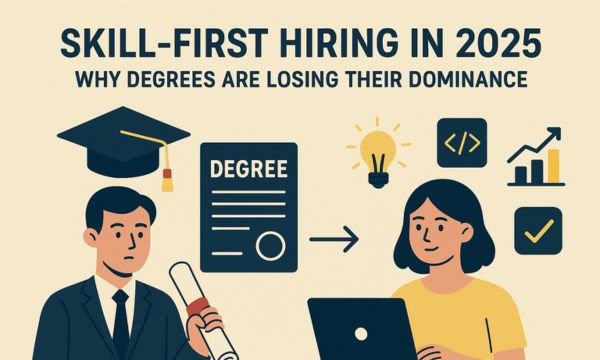
For much of modern history, education has been tightly bound to degrees. The equation was simple: education meant degrees, and degrees meant jobs. Universities were the undisputed gatekeepers of knowledge, and employers measured a candidate’s worth by the weight of their diploma. But over the last twenty years, this story has been rewritten. The rise of technology, globalization, and shifting industry demands have slowly but firmly moved us into a new era—one where skills, not degrees, define employability.
The early 2000s were still firmly degree-driven. A student’s success was measured by where they studied and what certificate they carried. Knowledge was relatively scarce, and universities held the keys to opportunity.
Linear Goal: complete school -> secure a degree -> step into the workforce
The 2010s shook that foundation. Massive Open Online Courses (MOOCs) from Coursera, edX, and Udacity opened the gates of elite universities to anyone with internet access. Suddenly, knowledge was no longer confined to the walls of academia. Alongside this, conversations on “21st-century skills”—creativity, communication, collaboration, and critical thinking—challenged the rote-learning model.
Then came the mobile revolution. With smartphones and affordable data, education was no longer confined to classrooms. YouTube lectures, online coding bootcamps, and gamified learning apps made continuous learning possible for everyone. Employers began to notice that candidates who learned through these platforms often came with real, demonstrable skills—sometimes sharper than those of degree-holders.
The pandemic of 2020 was the great accelerator. It marked a historic turning point. Over 1.6 billion learners were forced online, prompting education systems to adopt digital learning. Virtual classrooms and online exams became the norm, exposing inequities but also proving that education could be delivered beyond brick-and-mortar walls. By then, industries had realized the truth: by the time a degree was earned, entire technologies had already changed.
Why Degrees Are Losing Their Grip
the Degrees still matter—they reflect discipline, commitment, and foundational knowledge. They aren’t disappearing, but their dominance has weakened and monopoly is broken. The modern workplace evolves so quickly that a degree earned five years ago may already feel outdated. The reason is simple:
- Pace of Change: Technology evolves faster than curricula. A four-year degree can’t keep up with emerging fields like AI, blockchain, or renewable energy.
- Accessibility of Skills: Online platforms, micro-credentials, and bootcamps make it possible to gain industry-relevant skills in weeks, not years.
- Proof Over Paper: Employers increasingly value portfolios, digital badges, and hands-on projects as tangible evidence of competence.
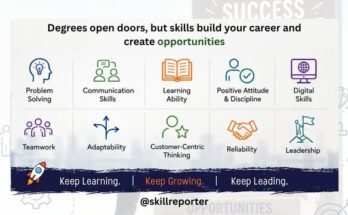
A degree shows what you studied; Skills show what you can do
The Rise of Skill-First Hiring
Fast forward to today, and the shift is undeniable. Global companies have openly declared that skills matter more than degrees. Instead of asking “Where did you study?” employers are now asking, “What can you do?”
This approach is being reinforced by three major developments:
- Digital Badges & Micro-Credentials: Short-term, industry-recognized courses allow professionals to upskill in weeks, not years. A data analyst can showcase a Google Data Analytics badge; a designer can highlight Adobe or Figma certifications; a renewable energy worker might present credentials in solar technology. These badges act as visible, verifiable proof of competence.
- Portfolios Over Papers: A GitHub repository, a design portfolio, or even a well-curated LinkedIn profile often carries more weight than a transcript. It tells employers not just what you studied, but how you applied it.
- Industry Adoption: Technology, digital marketing, renewable energy, gaming, and the gig economy are already leading the way. Even traditional industries like automotive, retail, and healthcare are shifting hiring models, valuing adaptability and hands-on expertise over static degrees.
A worker’s ability to learn, unlearn, and relearn is the true currency
Industries leading this trend include:
- Technology & IT: Coding bootcamps, cloud certifications, and cybersecurity credentials are often more valued than computer science degrees.
- Digital Marketing: SEO, social media strategy, and analytics certifications outweigh formal academic pathways.
- Renewable Energy & Green Jobs: Technical training programs and vocational certifications take precedence.
- Creative Industries: Design portfolios, video editing reels, and freelancing projects serve as proof of expertise.
Even government skilling initiatives now encourage micro-credentials and digital badges to bridge the talent gap.
How Job Seekers Can Adapt
If degrees are no longer the sole measure, what replaces them? The answer lies in building a skills portfolio:
Earn Micro-Credentials: Short, industry-backed certifications from recognized platforms demonstrate up-to-date skills.
Build a Portfolio and Showcase: Showcase real-world projects—coding repositories, marketing campaigns, design work.
From Degrees to Skills: A New Currency of Opportunity
In just 20 years, education has shifted from rigid, degree-based systems to flexible, skill-driven ecosystems. Degrees still carry weight, but they are no longer the sole passport to opportunity.
What truly matters today is what you can do, how fast you can adapt, and how ready you are for the challenges of tomorrow.
In this new era, skills have become the universal language between job seekers and employers—a language that opens doors, builds futures, and defines success in the 21st century.
Keep Learning: Lifelong learning is now a necessity, not an option.
The most employable candidates are those who combine adaptability with evidence of skills.
(The views expressed in the article are for informational purposes only. Readers are advised to conduct their own research before making any decisions. Skill Reporter shall not be responsible for any person/ organization directly or indirectly.)