10 key takeaways from India’s Chairship — and what they could mean for the global skills ecosystem
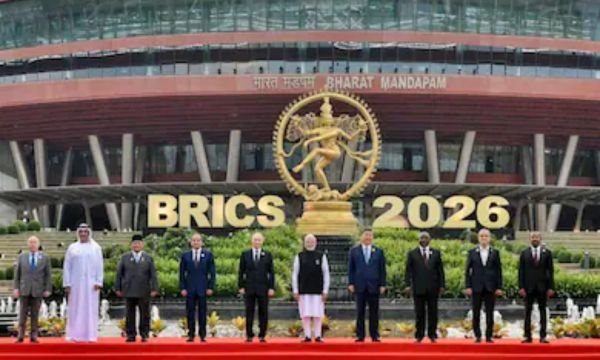
India’s 2026 BRICS Chairship was not a single summit but a year-long process involving more than 350 meetings and high-level engagements across more than 25 cities. The September 12–13 New Delhi Summit brought this work together through the New Delhi Declaration, but several of the most significant developments for education, skills and employment had already emerged through the Education, TVET, Labour & Employment, ICT, Youth, Women, Industry and MSME tracks.
For the skills and workforce ecosystem, the larger story is the movement from training people to understanding what skills economies will need, preparing workers for those needs, recognizing their qualifications, supporting mobility and connecting skills with employment and enterprise.
1. BRICS-TCA: probably the most directly relevant development for skilling
One of the clearest proposals under the BRICS Technical and Vocational Education and Training Cooperation Alliance (BRICS-TCA) was India’s proposal for an International Skill Gap Study involving interested BRICS members on a voluntary basis.
The BRICS Technical and Vocational Education and Training Cooperation Alliance (BRICS-TCA) received significant attention under India’s 2026 Chairship.
On 3–4 August 2026, MSDE/NSDC convened the BRICS-TCA Research Symposium and Joint Management Committee meeting in New Delhi under the theme:
“Sustainable and Digitally Enabled TVET: The BRICS Perspective”
Three particularly important proposals emerged:
- BRICS International Skill Gap Study: India placed a proposal for an international skill-gap study covering BRICS countries. The purpose discussed was to identify emerging occupations, workforce shortages, changing skill requirements, areas of future demand. This is potentially significant because it moves BRICS cooperation from simply discussing “skills” towards labour-market intelligence and evidence-based skills planning. The proposal was subsequently reflected in the 13th BRICS Education Ministers’ Declaration, which acknowledged India’s initiative and invited interested BRICS members to participate voluntarily.
- BRICS Skills Competition: A BRICS Skills Competition was proposed to promote vocational excellence and create a shared understanding of occupational competence. It could eventually create a BRICS-level mechanism for benchmarking vocational excellence, showcasing skilled talent, comparing occupational competencies, and strengthening international skills recognition.
- Compendium of Good Practices in TVET: India also proposed a compendium of good practices in TVET, covering industry partnerships, digital learning, qualifications, financing mechanisms.
2. TVET was repositioned as part of workforce and economic strategy
The BRICS-TCA discussions went beyond traditional vocational training. The final New Delhi Declaration recognized the BRICS-TCA as a platform for information exchange, resource sharing and joint TVET development and called for stronger skill-development systems, digital literacy, workforce preparedness and alignment of training with changing market demands. It also specifically highlighted stronger TVET–industry linkages.
3. Skills forecasting was linked directly to employment
The Labour & Employment track added another layer to the skills agenda.
At the July 2026 BRICS Labour & Employment Ministers’ Meeting, skills development was one of the four major areas of cooperation. The final Leaders’ Declaration went further, committing BRICS to strengthen cooperation in forecasting skills needs by analyzing labor-market trends in digital, green, care and other priority sectors.
This is important because it connects three areas that are often handled separately:
Labour-market trends → skills requirements → workforce development.
The International Labour Organization also highlighted skills systems, labour-market formalisation and digital transformation as important areas of its technical engagement with the BRICS process in 2026.
BRICS countries can develop common approaches, pilots or shared methodologies for labour-market and skills forecasting.
4. BRICS CONNECT — one of the most important institutional outcomes
India introduced BRICS CONNECT, the BRICS Cooperation Network for Capacity Building, Employability, and New Skills and Technologies during the Labour & Employment Ministers’ Meeting.
The initiative is intended to strengthen technical cooperation, skills forecasting, labor-market intelligence, knowledge exchange and capacity building among BRICS countries. The Leaders’ Declaration formally welcomed its adoption and placed it alongside the existing BRICS Virtual Liaison Office for Social Security Cooperation.
This gives the 2026 skills agenda an institutional mechanism through which cooperation can potentially can bridge between
skills data → labour-market forecasting → training → employability → employment services → workforce mobility
and move beyond meetings, declarations towards peer learning, capacity building and exchange of practices.
5. Mutual recognition of qualifications (MRQ) became a major skills issue
Skills mobility requires more than training. A worker’s qualification must also be understood and trusted across borders.
The BRICS Education Ministers agreed to continue Working Group discussions towards a Memorandum of Understanding on Mutual Recognition of Qualifications, with the objective of facilitating greater academic mobility, institutional exchanges, and cooperation.
The New Delhi Declaration subsequently encouraged cooperation on mutual recognition of qualifications and academic and professional mobility, while also linking TVET-industry cooperation with opportunities for jobs.
6. Digital skilling became a separate BRICS cooperation pillar
The BRICS ICT/Communications Track under India’s Chairship had four pillars:
- Sustainable and resilient digital/ICT ecosystems
- Cybersecurity and trustworthy ICT
- Digital skilling and capacity building
- Innovation, startups and entrepreneurship.
The Communications Ministers’ Meeting identified digital skilling and capacity building as one of the four pillars of India’s ICT Track, alongside digital infrastructure, cybersecurity, and innovation/startups.
The New Delhi Declaration also encouraged cooperation in digital skilling, research and capacity building and noted India’s proposal for capacity-building centres for BRICS member states aimed at supporting a future-ready workforce.
The education track additionally encouraged safe, ethical and human-centred use of emerging technologies, including AI, in education.
7. Youth entrepreneurship was brought into the future-of-work agenda
The Youth Track began with education, skills, entrepreneurship, science and innovation as core areas of cooperation. The Youth Entrepreneurship Working Group subsequently brought young entrepreneurs and policymakers together to discuss innovation, inclusion and sustainable enterprise.
The final Leaders’ Declaration encouraged continued BRICS youth cooperation across Education, Training and Skills; Youth Entrepreneurship; Science, Technology and Innovation; development; sustainability and youth inclusion.
This broadens the definition of workforce readiness: young people are being considered not only as future employees but also as entrepreneurs, innovators and participants in emerging economies.
8. The startup and MSME agenda connected skills with technology adoption
The Industry Track produced important developments around MSMEs, startups and Industry 4.0.
India proposed a BRICS Incubator Network and BRICS Startup Innovation Fund. The final declaration welcomed the establishment of the Incubator Network and further consideration of the Startup Innovation Fund. It also supported deeper engagement among startups and SMEs and greater cooperation around Industry 4.0.
This matters for skills because technology adoption by MSMEs ultimately depends not only on access to technology and finance, but also on the availability of people who can use, manage and adapt those technologies.
9. Women: skills + entrepreneurship + economic participation
The Women’s Track placed women’s entrepreneurship and skill development alongside governance, leadership, financial inclusion and digital inclusion.
The Women Ministers’ Meeting in Kochi produced the first Joint Statement in the Women Track, while India also advanced initiatives around knowledge sharing, peer learning and capacity building.
The New Delhi Declaration recognized women’s access to skill development, capacity building, entrepreneurship opportunities and digital inclusion as important to sustainable development and economic participation. It also welcomed the development of BRICS Women’s Digital Capacity Building Guidelines.
10. The real test now begins: can declarations become working mechanisms?
The September Summit consolidated the year’s work into the New Delhi Declaration, covering education, TVET, labour, skills forecasting, digital skilling, youth, women, entrepreneurship and technology.
For the skills ecosystem, the most important commitments and initiatives now sitting on the table include:
- International Skill Gap Study
- BRICS-TCA Biennial Progress Report
- Compendium of Sustainable Skill Initiatives
- BRICS Skills Competition proposal
- BRICS CONNECT
- Mutual Recognition of Qualifications discussions
- capacity-building centres for BRICS member states
- stronger TVET–industry linkages
- skills forecasting in digital, green and care sectors
- BRICS Incubator Network and further consideration of a Startup Innovation Fund.
This makes the period after the Summit particularly important.
The next phase is less about announcing another set of priorities and more about determining which proposals acquire programmes, timelines, participating institutions, funding arrangements, measurable outputs and country-level implementation pathways.
One important caveat
Several 2026 outcomes are at different stages:
- Adopted/established: BRICS CONNECT, Education Ministers’ Declaration, Labour & Employment Declaration, Youth Ministers’ Joint Statement, BRICS Incubator Network.
- Proposed / under consideration: BRICS Startup Innovation Fund.
- Proposed / being developed: International Skill Gap Study, BRICS Skills Competition, TVET good-practices compendium.
- Ongoing discussions: Mutual Recognition of Qualifications and related mobility mechanisms.
- Recognised/proposed: capacity-building centres for digital skills.
What BRICS 2026 leaves on the table for the skills ecosystem
The most significant takeaway is that skills are increasingly being treated as infrastructure for economic participation rather than simply as training programmes.
The emerging BRICS chain looks like this:
Labour-market intelligence -> Skill-gap identification & forecasting -> TVET and education response -> Industry linkage -> Digital and future skills -> Qualifications and recognition -> Mobility and employability -> Entrepreneurship, startups and MSMEs
BRICS 2026 put skills much closer to the centre of economic cooperation than simply treating them as an education issue. The year’s work connected TVET, skill gaps, labour-market intelligence, future skills, digital transformation, qualification recognition, mobility, employability, entrepreneurship, MSMEs and startups into a broader workforce-development agenda.
This is why the 2026 BRICS process matters to the global TVET and skills community. It brought together several issues that are often discussed separately — skills, jobs, qualifications, technology, mobility, entrepreneurship and inclusion — within one broader cooperation framework. The New Delhi Declaration provides the political and institutional direction; the effectiveness of the agenda will depend on what BRICS members do with these mechanisms.
Share your comments Here on BRICS 2026