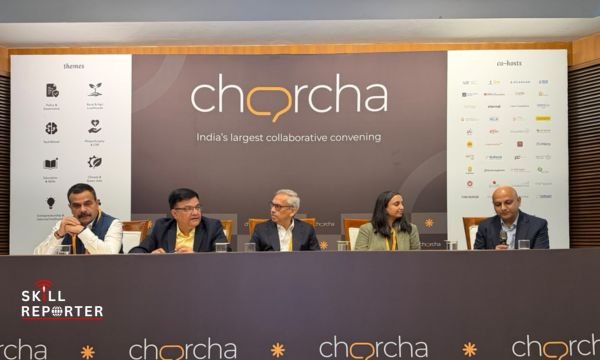
New Delhi: The skilling and workforce ecosystem needs to move beyond measuring success through training and placement numbers and focus more strongly on sustained employment, career progression and long-term economic mobility, emerged as a key theme at Charcha ‘26, convened by Generation India Foundation (GIF).
Held at India Habitat Centre in New Delhi, Charcha ‘26 brought together senior leaders from industry, skilling, philanthropy and the wider workforce ecosystem to examine how greater collaboration can make India’s workforce systems more responsive to changing labour-market needs.
The dialogue also highlighted a growing need for employers to move from being consumers of talent to active architects of talent pipelines—working earlier and more closely with skilling organisations, governments, funders and other ecosystem stakeholders to identify emerging skills, shape curricula and create stronger pathways into employment and career progression.
From consumers of talent to architects of talent
The first session, “Employers Shaping Skills, Jobs and Career Pathways,” examined the changing role of employers in a labour market shaped by persistent talent shortages, evolving technologies and changing workforce needs. The session brought together Vinkesh Gulati, Chairperson, Automobile Skill Development Council (ASDC); Shahrukh M, Associate Vice President, Strategy & Business Growth, Talenlio; Anjani Kumar Mishra, National Head – Skill Development, Shahi Exports Pvt Ltd; Vertika Vaish, Global HR Transformation & HRIS Lead, Bata Group; and Col (Retd) Binu Sharma, CEO, Infusion Nursing Society (INS), India and Executive Director, Lonestar Holdings Private Ltd. The discussion was moderated by Niharika Virmani, Assistant Vice President, Business Development, Generation India Foundation.
The discussion explored where employers see themselves today on a spectrum ranging from consumers of talent to architects of talent systems. While some employers spoke about already playing a more active role in defining skills, shaping talent pipelines and engaging with the skilling ecosystem, others reflected on the need to move more deliberately in that direction. The conversation highlighted that employers are at different stages of this shift, while underscoring the growing need for deeper employer engagement as workforce requirements continue to evolve.
Panelists discussed how employers can work more closely with skilling organisations, governments and other ecosystem partners to identify emerging skills, anticipate capability gaps, shape curricula and strengthen pathways into employment and career progression.
The discussion also highlighted the importance of employers engaging earlier in the talent-development process—not simply when a vacancy emerges, but as partners in understanding future workforce requirements and helping build the talent pipelines needed to meet them.
Moving beyond training towards economic mobility
The second session, “Strengthening Synergies Across the Skilling Ecosystem for Economic Mobility,” broadened the conversation from the role of individual stakeholders to the collective outcomes the workforce ecosystem should be working towards. The panel featured RCM Reddy, MD & CEO, Schoolnet India Limited & Learnet Skills Ltd; Prabhat Bhattacharya, APJ Regional Giving & Impact Leader, Dell Technologies; Prashant Pachisia, Founder Director, 2COMS and Director, Edujobs Academy; and Sharvi Dublish, Head of Jobs & Livelihoods, India, Michael & Susan Dell Foundation. The session was moderated by Arunesh Singh, CEO, Generation India Foundation.
A strong area of alignment across the discussion was the need to look beyond the outcomes of individual training programmes and ask a broader question: Are we creating pathways that enable people not only to enter employment, but to progress and achieve greater economic mobility over time?
The panel recognized that individual skilling programmes have an important role to play, but that their impact needs to be understood as part of a larger workforce system. At the centre of this system are two key stakeholders — the learner, the employer and understanding the needs of both is critical. Learners need access to relevant skills that can help them secure employment and progress in their careers, while employers need access to talent with the skills required by their businesses. Bringing these needs together is essential to building stronger pathways from skills to employment, career progression and economic mobility.
There was broad consensus on the importance of making economic mobility a shared ambition for the ecosystem, rather than viewing training and placement outcomes in isolation. The discussion explored how government, employers, funders and training organisations can move towards greater shared ownership of these outcomes and strengthen the connections between their respective efforts.
The panel also considered what meaningful collaboration looks like in practice. With no single stakeholder able to build a workforce system alone, the conversation focused on how stakeholders can strengthen coordination, address barriers to collaboration and work collectively towards outcomes that extend beyond training to sustained employment and progression.
Connecting employer action with economic mobility
Taken together, the two conversations highlighted two important shifts for the workforce ecosystem. The first is a shift in the role of employers – from primarily consuming talent to increasingly helping shape the skills, talent pipelines and career pathways that businesses and workers will need. The second is a shift in the outcomes the ecosystem is working towards – from measuring training and placement in isolation to building pathways that support employment, career progression and, ultimately, economic mobility.
These shifts are closely connected. More active employer participation can help make skills development more responsive to changing labour-market demand, while a stronger focus on economic mobility can help ensure that workforce interventions are designed around what happens to individuals beyond their first job.
Speaking on the occasion, Arunesh Singh, CEO, Generation India Foundation, said, “Building pathways to economic mobility requires us to look at both sides of the workforce equation. Employers need to play a more active role in anticipating demand, shaping skills and creating career pathways. At the same time, the wider ecosystem needs to align around outcomes that extend beyond training and placement to include progression and economic mobility. The conversations at Charcha ’26 showed that there is both an opportunity and an appetite to strengthen these connections.”
Through its participation at Charcha ’26, Generation India Foundation reaffirmed its commitment to working across sectors to strengthen the connection between skills, employment and economic mobility. By bringing employers and wider workforce ecosystem stakeholders into dialogue, GIF continues to contribute to conversations on how workforce systems can become more responsive to changing labour-market needs while creating stronger and more sustainable pathways to opportunity.