For many years, earning a college degree was considered the biggest milestone for getting a good job. While a degree still has its importance, the hiring landscape has changed significantly over the past five years. Across industries such as manufacturing, automotive, logistics, apparel, healthcare, retail, construction, and technology, employers are increasingly looking beyond academic qualifications. They want people who can solve problems, learn quickly, work well with others, and adapt to change.
This shift is also reflected in the World Economic Forum’s Future of Jobs Report 2025, which identifies analytical thinking, resilience, leadership, technological literacy, curiosity, and lifelong learning among the most important skills employers seek worldwide.
“Your degree may get you shortlisted. Your skills will decide how far you grow.”
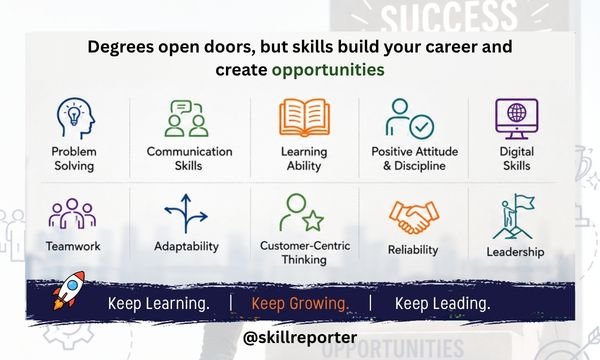
Here are the skills that employers consistently value more than academic qualifications.
1. Problem-Solving Ability
Workplace Reality: Every company faces challenges every day. A machine may stop working, a customer may raise a complaint, a delivery may get delayed, or production targets may not be achieved.
What Employers Look For: Employers value people who stay calm, identify the root cause of a problem, and suggest practical solutions instead of waiting for someone else to fix everything.
Why It Matters: Whether you are a machine operator, technician, sales executive, office assistant, or manager, your ability to solve problems makes you more dependable and more valuable to your organisation.
Opinion: Whenever you face a problem, ask yourself:
What happened?
Why did it happen?
How can I prevent it next time?
2. Communication Skills
Workplace Reality: Every job involves communicating with someone—your supervisor, colleagues, customers, vendors, or team members.
What Employers Look For: Good communication is not about speaking fluent English. It is about listening carefully, expressing your thoughts clearly, asking the right questions, and sharing information accurately.
Why It Matters: Employees who communicate well make fewer mistakes, build stronger relationships, and often progress faster into supervisory and leadership roles.
3. Learning Ability
Workplace Reality: Technology is changing the way every industry works. Automation, Artificial Intelligence (AI), digital reporting, cloud-based systems, and smart manufacturing are becoming part of everyday work.
What Employers Look For: Companies now look for people who are willing to learn new skills instead of relying only on what they learned in college.
Why It Matters: According to the World Economic Forum’s Future of Jobs Report 2025, nearly 39% of workers’ existing skills are expected to change by 2030. Those who continue learning will have better career opportunities throughout their working lives.
4. Positive Attitude and Discipline
Workplace Reality: Every organisation depends on people who can be trusted.
What Employers Look For: Employers appreciate individuals who arrive on time, take responsibility, respect others, follow safety practices, maintain honesty, and remain willing to learn.
Why It Matters: Technical skills can be taught. A positive attitude, discipline, and professional behaviour often determine who gets promoted.
5. Digital Skills
Workplace Reality: Today, almost every job uses technology in some form.
What Employers Look For: Basic digital skills such as using Microsoft Excel, Word, email, smartphones, online meeting platforms, digital documentation, and AI tools for routine tasks have become increasingly important and you do not need to become a software engineer.
Why It Matters: The World Economic Forum identifies technological literacy as one of the fastest-growing workplace skills. Employees who are comfortable using digital tools are more productive and better prepared for future roles.
Basic digital skills such as:
- Using smartphones professionally
- Working with Microsoft Excel and Word
- Sending emails
- Using online meeting platforms
- Entering data correctly
- Understanding AI tools for daily work
can make a huge difference during recruitment.
6. Teamwork
Workplace Reality: Very few jobs are done alone. Factories, offices, hospitals, warehouses, and service industries all depend on teamwork. No organisation succeeds because of one person alone.
What Employers Look For: Employers value employees who cooperate with colleagues, share knowledge, respect different viewpoints, and work towards common goals.
Why It Matters: Strong teamwork improves productivity, reduces workplace conflicts, and creates opportunities for leadership.
7. Adaptability
Workplace Reality: Business priorities, customer expectations, technology, and market conditions continue to change rapidly.
What Employers Look For: Companies want employees who can accept new responsibilities, learn new systems, and adjust to changing business requirements.
Why It Matters: The ability to adapt has become one of the most important qualities in today’s workplace. Employees who embrace change remain relevant, even as industries evolve.
8. Customer-Centric Thinking
Workplace Reality: Every employee serves a customer—either directly or indirectly. Even if you never meet customers, the quality of your work affects their experience.
What Employers Look For: Employers appreciate people who understand that customer satisfaction is everyone’s responsibility.
Why It Matters: Employees who think from the customer’s perspective contribute to stronger business relationships and long-term organisational success.
9. Leadership
Workplace Reality: Leadership is not limited to managers.
⚙️A shop-floor worker who guides new employees demonstrates leadership. ⚙️ A technician who takes ownership during a breakdown shows leadership. ⚙️ A sales executive who helps teammates achieve targets shows leadership. ⚙️ Employers notice people who take initiative instead of waiting for instructions.
What Employers Look For: Employers recognize people who take initiative, inspire others, support their teams, and help solve workplace challenges.
Why It Matters: Leadership qualities become increasingly important as you move into senior roles. They help you earn promotions and build long-term career success.
Skills That Matter at Every Career Stage
Freshers
Employers understand that fresh graduates may not have experience. What they really look for is:
- Willingness to learn
- Positive attitude
- Basic technical knowledge
- Communication skills
- Discipline
Remember: Your learning attitude is often more important than your marks.
Early Career Professionals (2–5 Years)
At this stage, employers expect you to move beyond following instructions. Focus on developing:
- Problem-solving
- Teamwork
- Digital skills
- Time management
- Accountability
- Customer handling
These skills help you become someone the organisation can rely on.
Mid-Level Professionals (5–12 Years)
As responsibilities grow, technical expertise alone is no longer enough. Employers now expect you to demonstrate:
- Decision-making
- Process improvement
- Cross-functional collaboration
- Coaching junior employees
- Cost awareness
- People management
This is the stage where specialists begin transforming into leaders.
Senior Professionals and Leaders
For senior leadership roles, success depends less on technical knowledge and more on business leadership. The most valuable skills include:
- Strategic thinking
- Change management
- Innovation
- Talent development
- Business understanding
- Building high-performing teams
At this level, your greatest responsibility is enabling others to succeed.
Final Thoughts
One of the biggest misconceptions among job seekers is that a degree alone guarantees employment. In reality, employers ask a different set of questions:
Can you solve problems?
Can you learn new skills?
Can you work effectively with others?
Can you adapt to change?
Can people trust you to deliver?
These are the qualities that build successful careers. Today, opportunities to build industry-relevant skills are more accessible than ever through vocational education, apprenticeships, internships, online learning platforms, government skill development programmes, and hands-on workplace experience.
Your degree may open the first door, but your skills determine how many more doors open throughout your career.
As the World Economic Forum’s Future of Jobs Report 2025 highlights, employers increasingly value analytical thinking, adaptability, technological literacy, leadership, and continuous learning. The message is clear: those who keep learning will remain employable, regardless of how industries evolve.
References
https://www3.weforum.org/docs/WEF_Future_of_Jobs_Report_2025.pdf
https://www.skillreporter.com/editorial/world-economic-forum-future-of-jobs-2025-core-skills-of-2030/